

Scouting In Andover

Welcome or welcome back to History Buzz! If you’re a subscriber to the Buzz, thank you! If you’re new here, or you haven’t become a subscriber yet, hit that subscribe button to have History Buzz delivered directly to your inbox. If you can, please consider a paid subscription to support the research and writing that make History Buzz possible.
This past April marked the 110th year of the Scouting organization in Andover and the 100th year of the formation of the former North Essex Council which served the towns of Lawrence, Andover, North Andover and Methuen.
The Scouting movement was established in England by Robert Baden Powell in 1908 as the “Boy Scouts Association in Britain”. The mission was to build character and engage boys in camping, craft skills with set requirement goals of earned ranks from Tenderfoot to Eagle Scout. Always “Be Prepared” and “Do a Good Turn Dailey!” The program was a smashing success and was quickly adopted in the USA as the “Boy Scouts of America”. The first troop was established in Sliver Bay, NY on Feb. 8, 1910 by W. D. Boyce, Edward S. Steward & Stanley D. Willis. The National BSA office opened on June 1, 1910 in NYC at the YMCA on 28th St. with James E. West as the Chief Scout Executive.
It would be six more years before the Scouting program was established in Andover for boys age twelve to eighteen. A post-graduate student at Phillips Academy, Joseph Hamilton Lewis, age 21, from Pittsfield, MA introduced the program to the community. On Saturday afternoon of March 26, 1916 in the Town Hall,
“Mr. Lewis explained the purpose of the movement which is international in scope and is absolutely non-sectarian. It is not a military organization, but it stands for loyalty, patriotism and chivalry while advocating universal peace. “Preparedness for life is the watchword.” Mr. Lewis, who is an experienced Scout leader and executive, will be in charge of the troops. Meetings will take place in the lower town hall”
At the first meeting on April 8, at 2 pm over 50 boys from all parts of Andover came to begin their journey in the scouting program. Temporary patrols of 8 boys each were formed, and requirements to become a Tenderfoot Scout were explained. Tests would begin on Wednesday the 12th at 4pm. Fourteen Scouts passed the Tenderfoot requirements and were now striving for second class rank.
Mr. Lewis announced that the scouts had been asked to march in the Memorial Day parade and to assist in helping decorate the Veteran’s graves. By mid-May, 75 boys had passed Tenderfoot, and were working hard to make a good showing in the parade. Four Patrols were created Eagle, Wolf, Beaver and Bear. The following weekend 30 boys hiked to Mills Hills, held games and signal practice. The scout troop prepared a booth for a health exhibit at Town Hall, did a sketch, and the newly formed Boy Scout Bugle and Drum Corp made its first public exhibition. Arthur Bliss, leader of the Andover Brass Band was the instructor. By June four troops had been formed for nearly 100 boys. Scout Executive Lewis then enlisted help from a fellow post-grad student at Phillips Academy and scout Harold B. Whip who was 18 at that time.
Mr. Tyler Carlton’s “Walk Down Main St.” remembers;
“Town Hall – The lower town hall where the Boy Scouts met under the leadership of “Ham” Lewis and Harold Whipp has become a court room. “Ham” and Harold were taking post graduate work “on the hill” but found time to lead four troops, some one hundred and twenty or more boys, in the Scout program. They even ran a summer camp for us in Middleton on the Ipswich River. I remember Mr. Phil French (Senior) and a Mr. Homer, who lived next to the Abbot Cricket Field on Abbot Street, as members of the local council. That was in 1916.”
Not to be overlooked, on May 23, 1916 a meeting to organize Girl Scouts was held in the Lower Town Hall.
“The girls came in swarms to hear Miss Lesley of Cambridge to tell of the new movement for girls of ten years of age and older. Miss Esther Smith has consented to be captain of the troop and 118 girls have registered to qualify. A number of lieutenants for Miss Smith and patrol leaders will be chosen. Next meeting in Guild Hall on Wednesday at 4:30 pm.
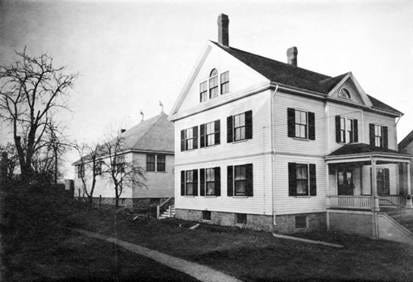
As summer approached a camp site was created in Middleton, on the Ipswich River. On July 7th “Scout Executive Lewis left this morning for the Ipswich River at Middleton.” Fifteen boys left for camp and hiked from Elm Square to Wilson’s Corner then took the Salem trolley to Middleton.” They watched for a camp sign placed by the road. The trolley stopped and boys all hiked in with their gear.
The Executive committee consisted of, Philip R. French President, Lewis H. Homer Treasurer, Clover J. Stone, with Hamilton Lewis Executive and Harold Whipp Assistant. Executive made arrangements to use the site. They called it “Camp Andover”, which ran for about seven weeks with Lewis as Camp Director and swimming instruction. Whipp was Pioneering and Scout Craft Director. The camp Senior Patrol Leader was Charles Dalton. The scouts even published their own paper “The Bugle Calls”. Forty four scouts attended that first year of camp.
In the fall the Andover Guild building at 10 Brook St. would become the meeting place for both the Girl Scouts and Boys Scouts as their ranks increased in size. The building was built as a youth center, had meeting rooms, a large gymnasium and with bowling alleys in the basement.
Executive Lewis and Harold Whipp’s time at the academy was nearing an end.
By November of that year the Boy Scout program reorganized into what was called the Metropolitan plan of work.
“Each troop is in direct charge of a Scoutmaster under this system. The Scout Executive takes pleasure in the securing of two men who will take charge of a troop each. Percival Symonds has received his commission as Scoutmaster of Troop I. Mr. Symonds is a teacher of mathematics in the local high school, and was a member of the Harvard gym team while in college. Mr. Symonds’ troop will meet on Friday, the first meeting being on November 17.
Edward Partridge who is a member of L Company, 8th Mass. Infantry which has just returned from the border, has been appointed Acting Scoutmaster of Troop III”.
This troop is the old troop IV. The Scout Executive is anxious to secure one more Scoutmaster to handle the remaining group. The Scoutmaster attends all of the meetings and outings of the troop and is responsible for the general program and supervision of the work of the troop. Under the new system more efficient work can be carried on.”
Executive Lewis and Harold Whipp’s time at the Academy was nearing an end. Executive J. Hamilton Lewis completed the year in Andover and returned to Pittsfield, MA. It appears that Hardwick Bigelow became the next Scout Executive for the Andover troops. When we entered WWI in 1917 the Scouting activities shifted to support the war effort such as; Distributing government literature, selling War Bonds and Stamps, helping the Red Cross, and building Victory gardens.
Scoutmaster Percival Symonds resigned when he excepted a new teaching job in Worchester in 1917. Robert V. Deyermond then took charge of Troop 1. Scoutmaster Henry G. Tyer headed Troop 2 and Edward Partridge, Troop 3.
There was no mention of a second season of “Camp Andover” in Middleton. There were however other scout camps such as Camp Pow Wow in Amesbury, Camp Chadwick in Dunstable and later Camp Manning in Andover on Pomp’s Pond which opened in July 1921.
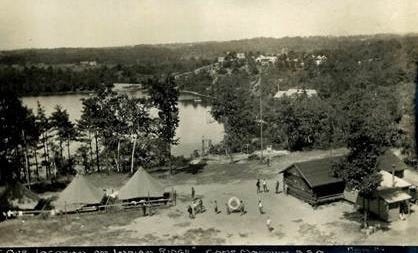
During the 1920’s most of the churches in town became the Chartered sponsors of the Boy Scout troops. The first Troop 1 was sponsored by a Group of Citizens with Ham Lewis as the Scout Executive which quickly grew to four troops.
In 1926 five troops are listed in Andover; Troop 1 Norman Allen, Shawsheen, then Scoutmaster Paul Rice, Troop 2 Free Church, Scoutmaster John W. Cameron, Troop 3 South Church, Scoutmaster Rosco N. Brannan, Troop 4 Ballardvale, Scoutmaster Clifford W. Reynolds, and Troop 5 Christ Church, Scoutmaster Doug Bacon.
It took ten years before the North Essex Council was organized and chartered in1926. Scout Executive Harvey “Pop” H. Bacon of Arlington, MA was hired by the council in November 1925. Harvey would spend the next 26 years leading the scouting programs in our communities. He was beloved by every scout and leader that had the honor of working with him.
Harvey created two council districts, the Menomack District serving troops north of the Merrimack River and the Shawsheen District for those, south of the river. As the number of troops increased in the council it was decided to give each town a different number so Andover was #7 and North Andover became #8. Troop 1 became #71. Tr 2 #72 etc. Harvey found scouts camps for the boys to attend until the council purchased a camp of their own in 1929. It was located in Raymond, NH and named was named “Camp Onway”.
In 1926 the Andover scouts attended the Malden Council “Camp Manning” on Pomp’s Pond. To my surprise, my Dad, “Abbott” is listed as one of the scouts at camp that summer. He had only just joined Troop 2 in February, became a Tenderfoot in March and Second Class in April.
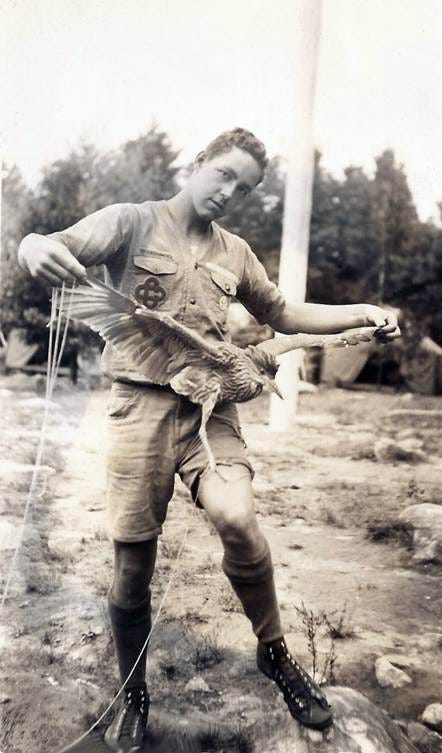
Eagle Tribune 6/10/1926 –“Scouts Enrolled at Camp Manning – Pomp’s Pond – Camp Staff – Dir. Herbert L. Patrick, Asst. Dir. Carl E. Taylor, Swimming & Athletics Dir. Morton B. Seavey, Scout Craft Dir. Harvey Bacon, Social Dir. Charles G. Hewett, Nature Study Charles W. Allen, Dir. of Activities Richard G. Copeland, Camp Physician Major Harry H. Nevers, Chef Mrs. Carl E. Taylor, Instructing: Scoutmasters and Jr. Leaders. Scouts from Andover; Troop 2, Stanley Swanton, S. Abbott Batchelder, William MacKenzie, George Simpson, Charles Simpson. Troop 3, E. Whittredge Clark.”
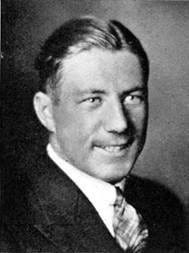
From 1927 to 1929 “Camp Chadwick” in Dunstable was used and Harvey Bacon was the staff Craft Specialist at both camps during the seasons. It was a banner year for Scouting in Andover in 1929. The troops erected a log cabin lodge on Prospect Hill for retreats and campouts. The first three Eagle Scouts in Andover were invested on Nov. 29th with a Court of Honor. The first Eagle was Harry Gouck, Troop 2, then David Petrie Troop 2 and Rene A. Richard Jr. Troop 1, all from the hands of Dr. Nathaniel Stowers, Deputy Commissioner. It was also the year that the North Essex Council purchased Camp Onway, in Raymond, NH. Council troops used it that year and helped prepare for the official new season in 1930. Onway holds lots of memories for everyone who spent time camping there in its 78 years of operation.
And just for record keeping the next four Eagle Scouts in Andover in 1930 were (4th) Alvin J. Zink, Troop 73, (5th) George E. Hadley Troop 73, (6th) S. Abbott Batchelder Troop 72 and (7th) Elwood N. Chase 2nd Troop 71. My Dad was also a camper that first year at Onway in 1930 and later on staff. Camp Onway deserves its own article which will come in the future.
In 1992 The North Essex Council merged with Lone Tree Council of Haverhill and Greater Lowell Council to create the new Yankee Clipper Council.
The Scouting movement continues, adapting to the 21st Century and becoming more inclusive, which now includes girls into the program. The organization is now “Scouting America”. as of Feb. 8, 2025. Andover’s first female Eagle Scout is Kari Belson, of Troop 73 South Church on April 25, 2025.
Thanks for reading. Be a part of the History Buzz community and leave a comment, like, or share this post.
History Buzz is a reader-supported publication. To receive new posts and support our work, consider becoming a free or paid subscriber.
References:
Wikipedia – History of Boys Scouts in America 1909 - 1915
Andover Townsman - March 25, 1916 – Dec. 1917
Lawrence Tribune 1926, 1929, 1931, 1940s
History of Camp Manning, Pomps Pond 1921
Andover Center for History & Culture, files
Stephanie Aude – Memorial Hall Library Refrence
Mark Svendsen, Historian of Scouting in North Essex Council
We have another thing in common Doug. I was also a member of Troop 77 at West Parish. I only made it to Star scout. Great time and some fantastic scoutmasters.
Thanks for the blog post, Jim. I'm an Eagle Scout, Troop 77 in West Parish, and have fond memories of scouting. My Eagle Project was to catalog grave stones in St Augustine's cemetery and it resides in ACHC's research library. But I didn't know much of scouting's history in town.