

Robert Russell
The Life of a Scottish Immigrant

Welcome or welcome back to History Buzz! If you’re a subscriber to the Buzz, thank you! If you’re new here, or you haven’t become a subscriber yet, hit that subscribe button to have History Buzz delivered directly to your inbox. If you can, please consider a paid subscription to support the research and writing that make History Buzz possible.
Several years ago, I wrote a short piece for the History Center’s newsletter about the house that used to stand at 28 Rocky Hill Road. I am told that I saw the house in person. It was demolished in 1983, around the time of my first birthday.
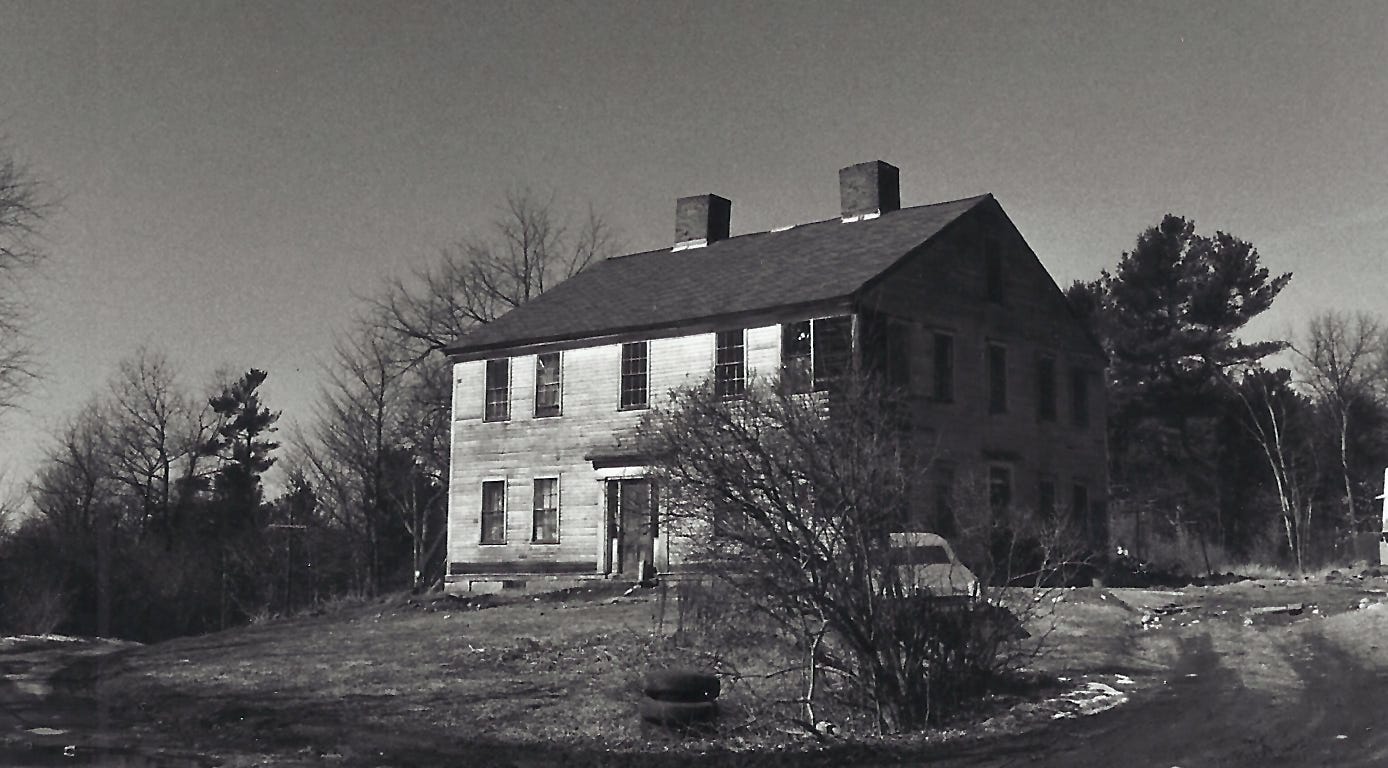
Robert Russell built the first iteration of that house. He and his wife Mary (Marshall) were the original European settlers in the neighborhood. Robert is said to hail from Scotland and that’s why my area of Andover is often called the Scotland District. He died in 1710, and is interred at South Church cemetery.
The stories about Robert’s life before his arrival in Andover do not always add up. Mumford and Martin’s genealogy lists the highlights. “It is believed that as a young man, he was sent to Virginia by an uncle, anxious to steal his inheritance and estate after the death of Robert’s father.” Robert crossed the Atlantic back to Scotland in time to fight in the English civil war as a Royalist. He was taken prisoner in the battle of Dunbar and was shipped back to the colonies, this time to serve 8 years of indenture.
Franklin H. White, in the Russells of New England and Their Immigrant Ancestors, is skeptical of the family lore. “While the English civil war timing is about right, it would have been unusual for anyone in that day to have started out in Virginia, then transplanted to Massachusetts shortly after arrival.”
Robert was awarded a house lot in the village center (today’s old North Andover center) sometime before 1662. It gives us a hint about Robert’s position in the pecking order of seventeenth century Andover. Philip J Greven writes that “The assignment of house lots… was a matter of the utmost importance since their size reflected the initial economic and social standing of the settlers and governed the extent of all subsequent allotments of land.” Simon Bradstreet, a major political leader in the Massachusetts Bay Colony, got twenty acres. Robert got 4 acres, one of the smaller allotments.
Digitized records have multiplied since my newsletter article. I have more practice at historical research and more space to write in. Could I learn more about Robert the man and separate him from the myth and the legend?
My first new find was actually in a filing cabinet at the History Center. The page at the very top of the Russell family file was a letter written to us by Raymond Russell, a descendant, in 1977. Raymond had hired a genealogist in England to investigate Robert’s time in the Royalist army and as a prisoner. The genealogist came up empty-handed. No records could be found. But an absence of records is just that. Maybe they did not survive.
Scottish prisoners of war were sent to the new world after the Battle of Dunbar in 1650 and the Battle of Worcester in 1651. The New England Historical Society recounts that around 150 prisoners from the Battle of Dunbar sailed to New England aboard the Unity. Fifty men were put to work at the Saugus iron works. Others were sent to Maine or sold individually.
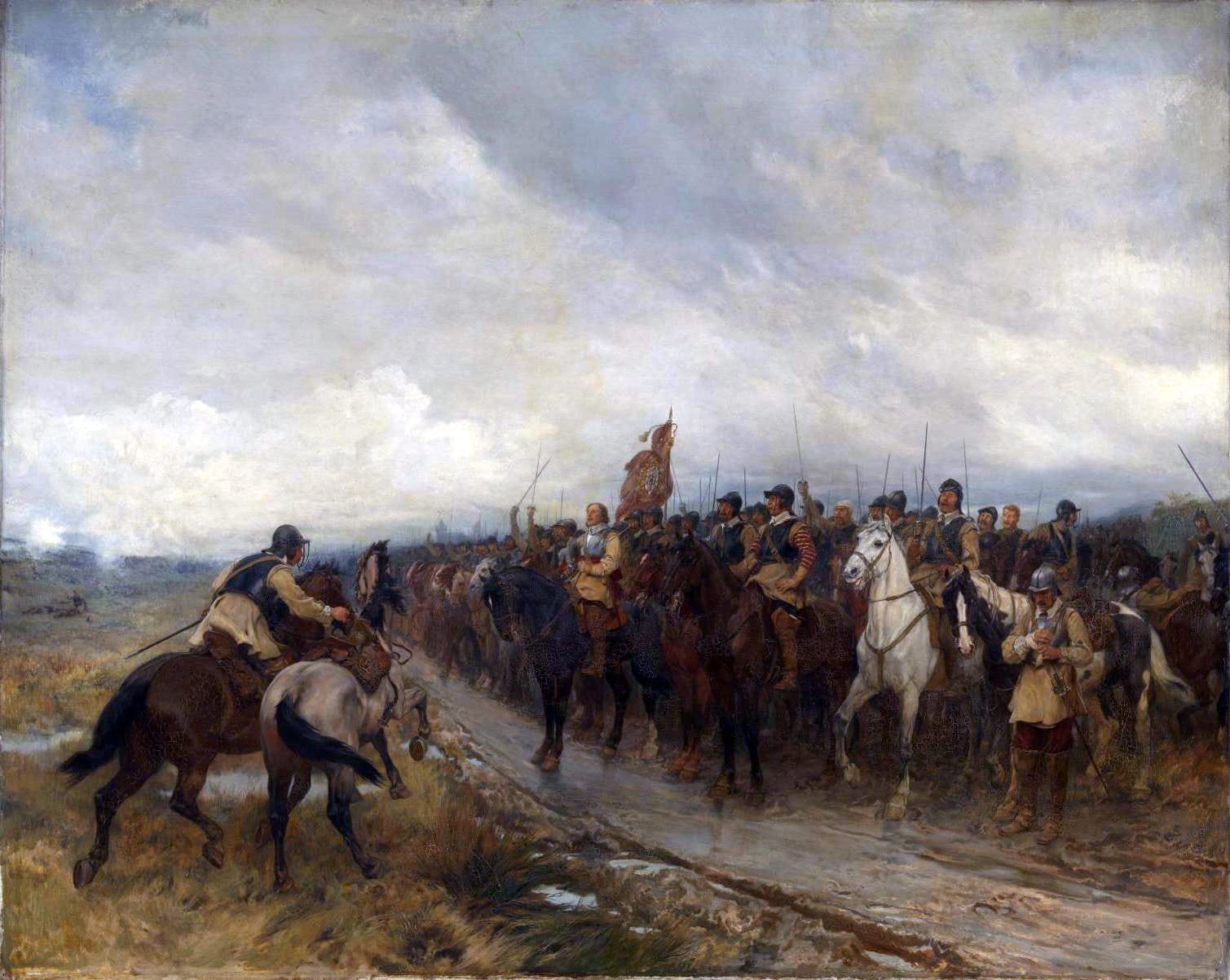
Colonial authorities perpetuated the story that these prisoners were to be indentured servants who signed contracts agreeing to the relationship. In reality, they were traded like slaves. The lucky ones married the boss’ daughter, received land grants, and appeared on the tax rolls. Could Robert have been indentured to his father-in-law, Thomas Marshall, who likely lived near Martin’s Pond in today’s North Reading?
The original passenger list for the Unity has never been found. The Scottish Prisoner of War Society has a list of suggested, but not necessarily proven, Dunbar POWs sent to Massachusetts in 1650. Robert’s name is not there. I checked the lists of the John and Sarah that carried POWs from the Battle of Worcester for good measure. Robert is not enumerated on that list, either.
Robert served on the first coroner’s jury in Essex County. The sources available on site at the History Center said that and nothing more. There was no hint of a verdict, or the circumstances, or the date.
I easily found a citation for an article on coroner’s inquests in colonial Massachusetts, asked a colleague for Interlibrary Loan help, and discovered that the article focused on Middlesex County. My next step was to e-mail the Massachusetts state library and, from there, I was referred to the Massachusetts archives.
After some index checking and fumbling around inside a digitized volume on Family Search, I met with success. The jury on which Robert served was tasked with looking into the death of Peter Allyn, who did not emerge after “goeing [sic] forth to work in the woods” in March of 1664.
Initially, I worried that Allyn took his own life. On examination, his cape was “bounde down about his neck”. The record mentions that he said distressing things around the time of his going into the woods.
The recorder elaborated on the next page. An “Indian” reported an Englishman’s body in the “Ryver called Shawshin” about one mile from Andover. The jury concluded that Allyn became lost and fell into the river while attempting to cross it. He died tragically. I inferred “due (doe?) Conceive that he was the cause of his own death” to mean something deliberate on Allyn’s part.
I also discovered that Robert was among a group of inhabitants wishing to establish a township south of Exeter, New Hampshire in 1670. I have two versions of the original petition. One includes notations about the decisions of the general court. It’s tough reading even for those who know cursive.
But I’m still stymied. I would love to find the original grant of land around today’s South Main Street to Robert Russell. The grant might mention Robert’s origins and, most certainly, who awarded the land. One of the stories floating around holds that Robert got land as a reward for his service to the crown.
The good thing is that I know more about Robert than I did a few years back. I liken it to finding pieces of the puzzle so it can be put together.
Please leave us a comment, and like and share History Buzz!
History Buzz is a reader-supported publication. To receive new posts and support our work, consider becoming a free or paid subscriber.
Further Reading:
· Philip J. Greven, Jr. Four Generations: Population, Land, and Family in Colonial Andover, Massachusetts. Cornell University Press, 1970.
· Massachusetts Court Records 1638-1692. Last Accessed July 6, 2025
· Massachusetts State Archives 1622-1788. Last Accessed July 6, 2025
Thanks to Erini Karoutsos, Reference Archivist at the Massachusetts Archive, for helping me navigate the online Felt Collection.
· Mumford & Martin: Robert Russell, Richard Barker, Daniel Poor and related families. Available at the ACHC Library 1999.72.1
· New England Historical Society. How Scottish POWS Were Sold as Slave Labor in New England. Last accessed July 6, 2025
· Franklin H. White. The Russells of New England and their Immigrant Ancestors.
Interesting article Doug - I enjoyed reading it. It's amazing the resources available out there. You're a great sleuth!
Thanks, Doug! We sure had our share of interesting characters during our times in Andover. Their stories are always intriguing and make me want to know more about these people.